

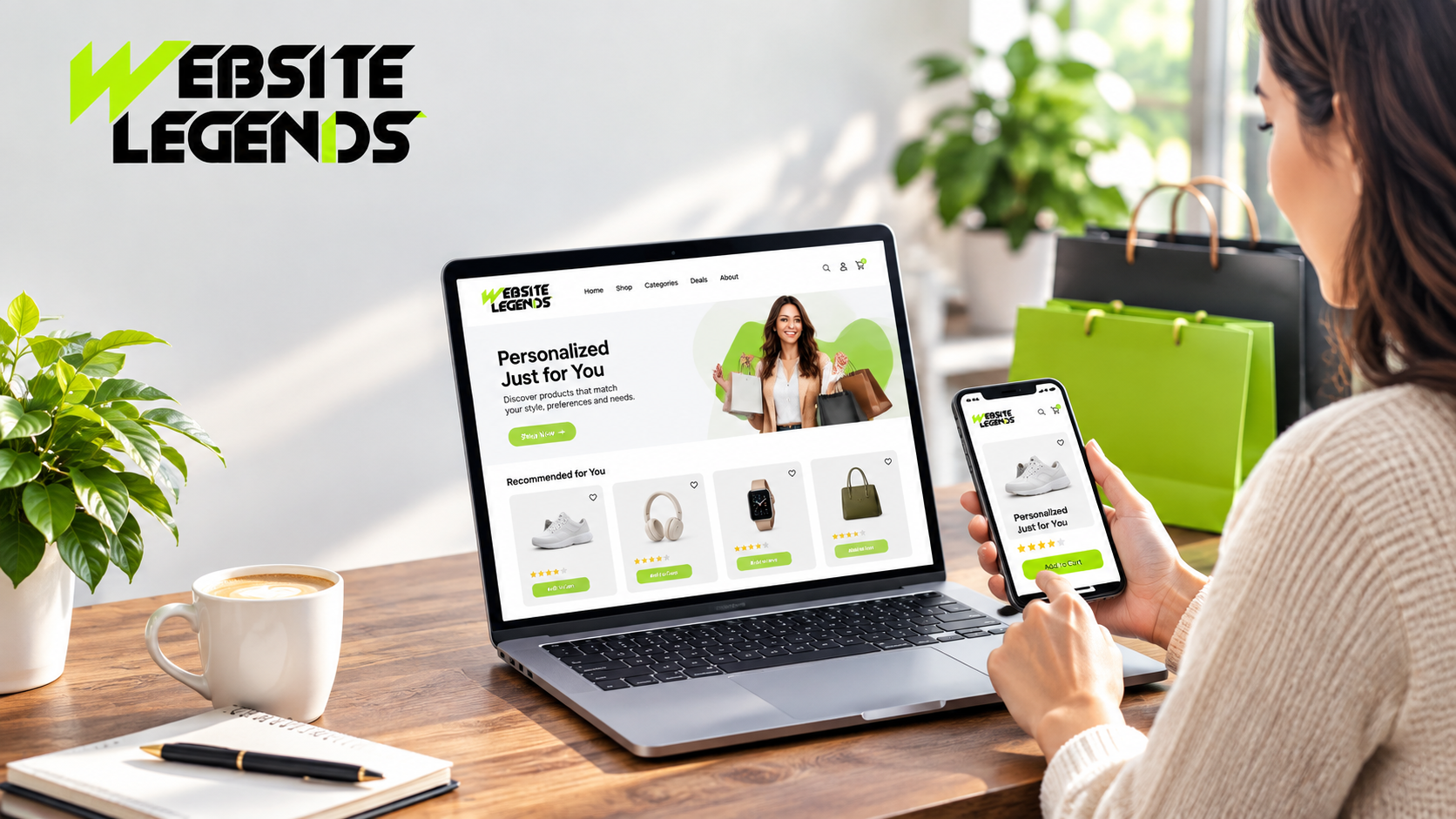
Online shoppers have more choices than ever. With countless products and ecommerce websites available, businesses need to find effective ways to make the shopping experience more relevant and convenient for customers. How Personalized Shopping Experiences Can Improve Online Store Performance is an effective approach to creating a more engaging customer journey and encouraging more sales.
Personalization can help online stores present customers with products, content, and recommendations that better match their interests. When implemented thoughtfully, personalized shopping experiences can improve engagement, encourage repeat visits, and support ecommerce growth.
For Seattle businesses, professional Website Legends Ecommerce Development can help create online stores with customer-focused experiences designed around specific business goals.
What Is Ecommerce Personalization?
Ecommerce personalization means adapting parts of an online shopping experience based on information about a customer’s interests, behavior, preferences, or previous interactions.
Depending on the website and available technology, personalization may include:
- Product recommendations
- Recently viewed products
- Related products
- Personalized offers
- Relevant content
- Customized email campaigns
- Suggested categories
- Personalized search results
The goal is not to overwhelm customers with technology. It is to make the shopping experience more useful and relevant.
Why Personalization Matters for Online Stores
Customers do not all have the same needs.
A visitor searching for one type of product may have completely different interests from another customer. Showing every visitor exactly the same content may make it harder for them to discover products that are relevant to their needs.
Personalization can help businesses create more targeted experiences.
For example, an online store could recommend products related to something a customer has already viewed. This can reduce the amount of time customers spend searching and make product discovery easier.
Personalized Product Recommendations
Product recommendations are one of the most common forms of ecommerce personalization.
An online store might recommend:
- Similar products
- Frequently purchased products
- Complementary products
- Recently viewed products
- Popular products
- New products
For example, a customer viewing a laptop might also see laptop accessories or related products.
When recommendations are genuinely relevant, they can improve product discovery and potentially create additional purchasing opportunities.
Personalization Can Improve the Customer Journey
A good ecommerce experience should make it easy for customers to find what they need.
Personalized experiences can reduce unnecessary browsing by presenting products and information that are more closely aligned with customer interests.
This can be particularly valuable for ecommerce websites with large product catalogs.
Instead of requiring customers to browse through dozens of pages, relevant recommendations can help them discover suitable products more efficiently.
Professional ecommerce web design should consider how personalization fits naturally into the customer journey rather than adding unnecessary features.
Using Customer Behavior Responsibly
Personalization depends on customer data and behavior.
Businesses should be transparent about how customer information is collected and used. Privacy, security, and responsible data practices should remain important considerations when implementing personalized ecommerce experiences.
Customers should feel that personalization is helping them not that their privacy is being ignored.
Trust is especially important for businesses that want to build long-term customer relationships.
Personalization and Mobile Shopping
Many customers interact with ecommerce websites through mobile devices.
Personalized product recommendations, recently viewed items, and relevant content can be particularly useful on smaller screens where customers may want to find products quickly.
Responsive Website Legends Web Development can help ensure that personalized elements remain easy to view and interact with across smartphones, tablets, and desktop devices.
A personalized experience should remain convenient regardless of how customers access the store.
Personalization Can Support Repeat Purchases
The relationship with a customer does not have to end after the first order.
Businesses can use appropriate personalization strategies to encourage customers to return.
For example, an online store may highlight products related to previous purchases or suggest items that complement something the customer already owns.
Email marketing can also be used to share relevant products, new arrivals, or promotions based on customer interests.
When personalization provides genuine value, it can help strengthen customer relationships and encourage repeat engagement.
Personalized Experiences Can Support Ecommerce SEO
Personalization and SEO serve different purposes, but they can work together as part of a broader ecommerce strategy.
SEO helps potential customers discover an online store through search engines, while a personalized website experience can help make their visit more relevant.
Website Legends SEO can support businesses with search engine optimization strategies, while Website Legends Ecommerce Development focuses on creating functional and customer-focused online shopping experiences.
For Seattle businesses, combining ecommerce SEO with strong ecommerce development can create a more complete approach to online growth.
Use Data to Improve Personalization
Personalization should be continuously evaluated.
Businesses can monitor customer behavior to understand which recommendations, categories, products, or experiences are performing well.
Useful performance indicators may include:
- Product engagement
- Conversion rates
- Repeat purchases
- Average order value
- Cart activity
- Customer retention
- Returning visitor behavior
Analyzing these metrics can help businesses refine their ecommerce strategies over time.
Personalization Should Support the Customer, Not Distract Them
More personalization does not always mean a better experience.
Too many recommendations, pop-ups, offers, or personalized messages can make a website feel overwhelming.
Effective personalization should be subtle and useful.
The best approach is to provide customers with relevant information at the right stage of their shopping journey without making the website feel complicated.
Building Personalized Ecommerce Experiences With Website Legends
Personalization can help ecommerce businesses create shopping experiences that feel more relevant, convenient, and customer-focused.
For Seattle businesses, the right technology and development strategy can make it easier to introduce useful ecommerce features while keeping the website scalable and easy to use.
Website Legends Ecommerce Development combines ecommerce website development, professional Website Legends Web Development, web design, SEO, social media marketing, and digital marketing services.
Whether you are building a new online store or improving an existing ecommerce website, personalized product recommendations and customer-focused experiences can help you create stronger opportunities for engagement and growth.
The goal of ecommerce personalization is simple: help customers find what they need more easily while creating a shopping experience they are more likely to remember and return to.