

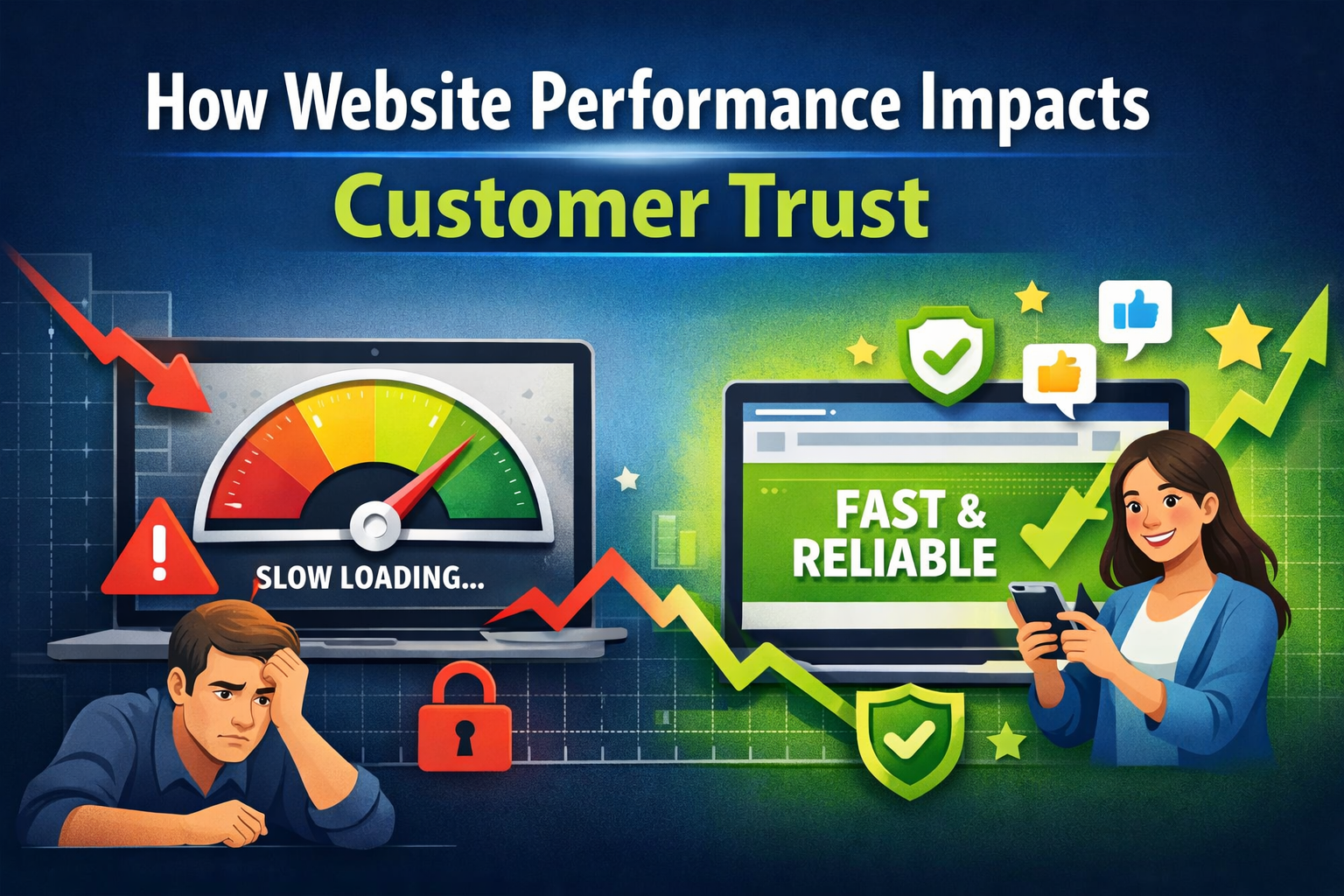
When someone visits your website, trust is formed in seconds — often before they read a single word.
Your design, speed, responsiveness, and overall performance silently communicate one message:
“Can I trust this business?”
In a digital-first world, website performance is no longer a technical detail handled in the background. It’s a direct reflection of your professionalism, reliability, and credibility. A slow, unstable, or poorly performing website doesn’t just frustrate users — it makes them question your brand.
In this article, we’ll explore how website performance impacts customer trust, why it matters more than ever, and what businesses should prioritize to build confidence from the very first click.
Why Trust Starts with Website Performance
Before customers trust your service, your product, or your expertise, they must trust your website experience.
Think about it from the user’s perspective:
-
If a site takes too long to load, it feels unreliable
-
If pages lag or break, it feels unprofessional
-
If navigation is clunky, it feels careless
Even if your business is legitimate, poor performance creates doubt.
Trust isn’t just built through testimonials or branding — it’s built through smooth, predictable, and fast experiences.
1. Website Speed and First Impressions
Website speed is often the first trust test your business faces.
Users expect websites to load quickly. When they don’t, visitors assume something is wrong — with the site or the business behind it.
What slow speed signals to users:
-
The business may not be active or maintained
-
The website may not be secure
-
The company may not care about user experience
These assumptions happen subconsciously, but they strongly influence decisions.
Why it matters
A slow website increases bounce rates and decreases engagement. People leave not because they dislike your brand, but because the experience feels unreliable.
Trust impact
Fast websites feel modern, capable, and trustworthy. Slow websites feel outdated and risky.
2. Stability Builds Confidence
Website performance isn’t just about speed — it’s also about consistency.
If pages fail to load properly, links break, or features behave unpredictably, users lose confidence quickly.
Common stability issues:
-
Pages crashing or freezing
-
Forms not submitting correctly
-
Errors during checkout or contact actions
-
Inconsistent behavior across devices
Why this damages trust
Customers associate instability with poor business operations. If the website can’t function smoothly, users wonder if the business can handle real-world responsibilities.
Trust impact
A stable website reassures users that:
-
Systems are maintained
-
Processes are reliable
-
The business is professional
3. Mobile Performance Shapes Credibility
Most users now access websites on mobile devices. If your site performs poorly on mobile, trust is lost instantly.
Mobile performance issues that hurt trust:
-
Slow loading on mobile networks
-
Text too small to read
-
Buttons difficult to tap
-
Layouts breaking on smaller screens
Why this matters
A poor mobile experience suggests the business is behind the times. Users expect seamless mobile performance — anything less feels careless.
Trust impact
A website that works flawlessly on mobile signals:
-
Attention to detail
-
Customer-focused design
-
Modern business standards
4. Website Performance and Security Perception
Performance and security are closely connected in the minds of users.
A slow or glitchy website feels unsafe, even if it technically isn’t.
How performance affects perceived security:
-
Long load times feel risky
-
Error messages raise suspicion
-
Unresponsive pages feel unstable
Users may worry about:
-
Data safety
-
Payment security
-
Privacy risks
Trust impact
Fast, smooth, and predictable performance reassures users that:
-
The site is well maintained
-
Security is taken seriously
-
Their information is safe
Trust grows when nothing feels uncertain.
5. Performance Influences Brand Credibility
Your website is a reflection of your brand. Performance problems don’t just affect usability — they affect brand perception.
Poor performance can make your brand feel:
-
Unprofessional
-
Inexperienced
-
Inconsistent
-
Low-quality
Strong performance makes your brand feel:
-
Reliable
-
Confident
-
Established
-
Customer-focused
Customers may forgive design preferences — but they rarely forgive poor performance.
6. Website Performance and Conversion Trust
Trust directly impacts conversions.
Even if visitors like your service, performance issues create hesitation at the moment of action.
Where trust breaks down:
-
During form submissions
-
At checkout
-
When booking or scheduling
-
When clicking calls-to-action
If a page hesitates, reloads, or behaves unexpectedly, users pause — and often leave.
Trust impact
A smooth experience encourages users to:
-
Submit their details
-
Make a purchase
-
Book a call
-
Reach out confidently
Performance removes doubt at the decision point.
7. Search Engines Also Judge Performance
Website performance doesn’t just affect human trust — it affects search engine trust as well.
Search engines prioritize websites that:
-
Load quickly
-
Perform well on mobile
-
Provide stable user experiences
Poor performance can reduce visibility, which indirectly affects trust. If users can’t find your site easily, credibility suffers.
Performance is part of how both users and search engines decide whether your website deserves attention.
What Businesses Should Fix First
If performance is hurting trust, start with these priorities:
-
Page speed optimization
-
Mobile responsiveness
-
Stable hosting and infrastructure
-
Clean, efficient code
-
Reliable forms and interactions
Improving performance doesn’t always require a full redesign — often it requires strategic optimization.
Why Website Legends Focuses on Performance
At Website Legends, performance is never an afterthought.
We understand that:
-
Trust is built through experience
-
Speed, stability, and usability drive credibility
-
A fast website converts better and ranks higher
Our approach combines:
-
Modern development practices
-
Performance optimization
-
User-focused design
-
SEO-friendly foundations
Because a website that looks good but performs poorly still fails.
Conclusion
Website performance is more than a technical metric — it’s a trust signal.
Every delay, glitch, or broken interaction sends a message.
Every smooth load and seamless action builds confidence.
If your website feels slow, unstable, or frustrating, it’s not just costing you traffic — it’s costing you trust.
And trust, once lost, is hard to regain.
A fast, reliable, high-performing website tells users one powerful thing:
“This business knows what it’s doing.”
Frequently Asked Questions
How does website speed affect customer trust?
Slow websites feel unreliable and outdated, causing users to question a business’s professionalism and security.
Can a slow website really hurt conversions?
Yes. Performance issues create hesitation at key decision points, leading users to abandon forms, checkouts, or inquiries.
Does mobile performance matter for trust?
Absolutely. Most users browse on mobile, and poor mobile performance quickly damages credibility.
Is website performance related to SEO?
Yes. Search engines favor fast, stable, mobile-friendly websites, which improves visibility and user trust.
Do I need a full redesign to improve performance?
Not always. Many performance issues can be resolved through optimization, better hosting, and technical improvements.