
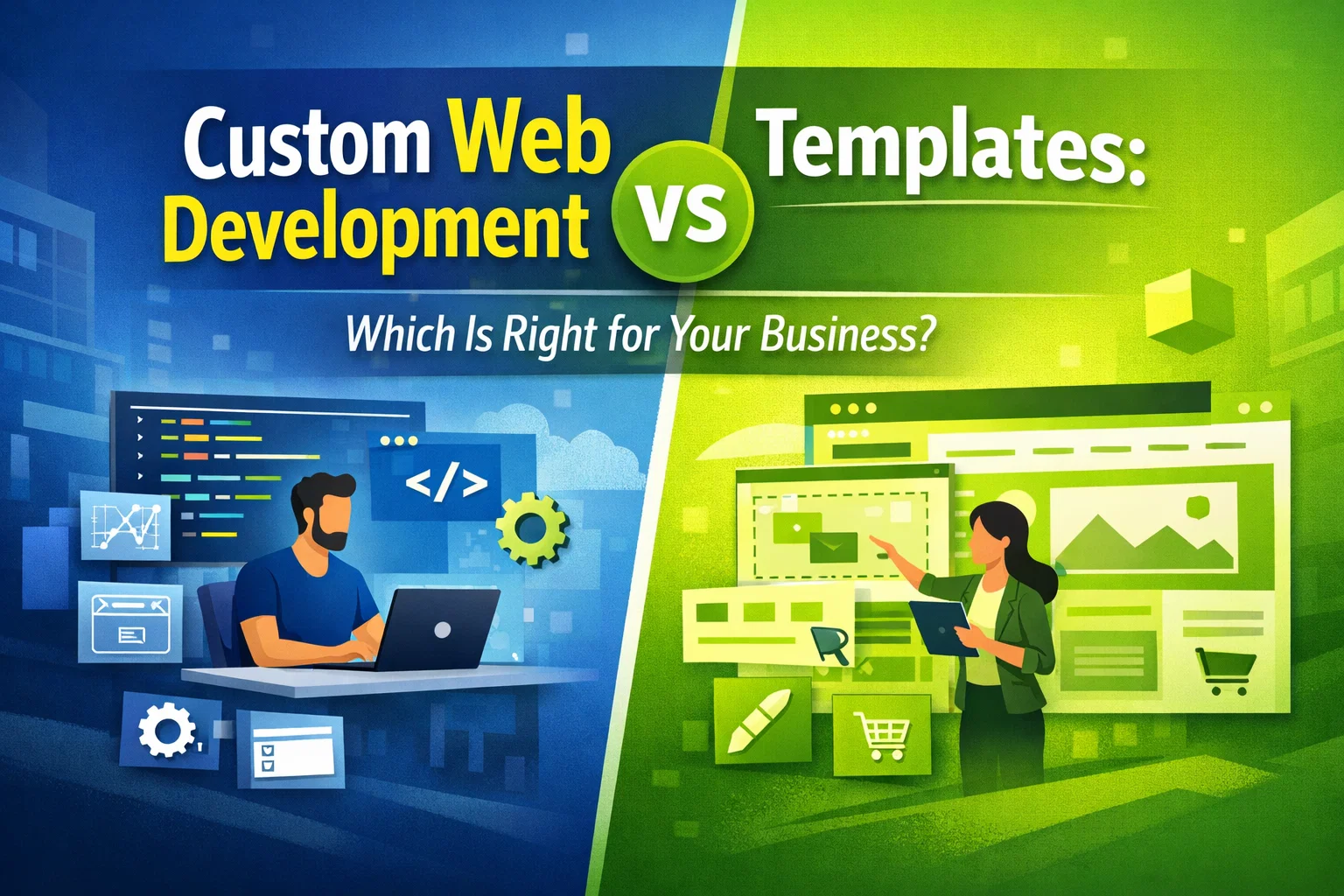
When it comes to building a website for your business, one of the most important decisions you’ll make is whether to go with custom web development or a website template. Each option has its pros and cons, and the choice will depend on your business goals, budget, timeline, and future scalability.
In this article, we’ll explore the differences between custom web development and templates, helping you make an informed decision about which one is right for your business.
What Is Custom Web Development?
Custom web development refers to the process of creating a website from scratch, tailored specifically to the unique needs and goals of your business. A team of developers, designers, and marketers works together to design a website that reflects your brand identity, offers a seamless user experience, and is optimized for performance and SEO.
Benefits of Custom Web Development:
-
Complete Control and Flexibility
With a custom-built website, you have full control over design, functionality, and features. This means you can incorporate any element that aligns with your business objectives, from unique design elements to advanced features and integrations. -
Scalability
Custom websites can grow with your business. As your needs change or you want to add new features, custom-built websites can be scaled without the limitations of templates or pre-built systems. -
Unique Branding
A custom website is designed specifically for your brand. You’re not confined to the limitations of templates, ensuring a unique online presence that sets you apart from competitors. -
Optimized for Performance and SEO
Custom websites can be optimized from the ground up. A development team can ensure the site is fast, secure, and search-engine friendly, helping you rank higher on Google. -
Better Integration with Business Tools
Custom websites can integrate seamlessly with third-party tools, CRM systems, e-commerce platforms, or other business software that you may be using.
What Is a Website Template?
A website template is a pre-designed website structure that you can customize with your content. Templates come with built-in layouts, themes, and functionalities, allowing you to create a website quickly and at a lower cost. Popular platforms like WordPress, Wix, Squarespace, and Shopify offer a wide range of templates to choose from.
Benefits of Using Website Templates:
-
Cost-Effective
Templates are much more affordable than custom-built websites. They eliminate the need for a development team, and you can typically get started with a template for a fraction of the cost of a custom website. -
Quick Launch Time
Because templates are already designed and only need to be customized, you can have your website up and running in a fraction of the time it takes to develop a custom website from scratch. -
User-Friendly
Many website template platforms are designed for non-technical users. With a drag-and-drop interface, you can easily customize content, upload images, and tweak the design to match your branding. -
Built-in Features and Functionality
Templates often come with a range of features built in, including contact forms, e-commerce capabilities, social media integration, and more. This means you don’t have to worry about adding these elements yourself. -
Design Flexibility
While templates come with predefined designs, they still offer some level of customization. You can modify the color scheme, fonts, and content to suit your brand, making it possible to create a unique look within the template’s framework.
Custom Web Development vs Templates: A Comparison
To help you decide which option is best for your business, here’s a side-by-side comparison of custom web development and website templates:
| Feature | Custom Web Development | Website Templates |
|---|---|---|
| Cost | High upfront costs due to development and design | Low initial cost, affordable options |
| Time to Launch | Longer development time (weeks to months) | Quick setup (a few hours to a couple of days) |
| Flexibility | Unlimited flexibility to meet specific needs | Limited to template features and structure |
| Scalability | Highly scalable, can evolve with your business | May face limitations as your business grows |
| Branding | Completely unique design tailored to your brand | Limited customization within template design |
| Maintenance | Requires regular updates and technical expertise | Easier to maintain with built-in tools |
| SEO | Full control over SEO optimization | Limited SEO control, may require add-ons |
| Security | Custom security features, secure development | Relies on the template platform’s security features |
| Support | Requires ongoing support and monitoring | Template platforms provide built-in support |
| Performance | Optimized for performance and speed | May require optimization for speed |
When Should You Choose Custom Web Development?
While website templates offer an easy, affordable way to get started, there are certain situations where custom web development is the better choice for your business:
1. You Have Unique Business Needs
If your business has unique features, custom functionality, or specific integrations (e.g., complex databases, custom user interfaces, or specialized forms), a custom-built website will allow you to meet these needs without being restricted by a template.
2. You’re Looking to Scale Your Business
A custom website grows with you. As your business expands and your needs change, a custom website can be adjusted to meet those needs. Templates, on the other hand, may not be as flexible when it comes to adding new features or scaling your site as your business grows.
3. You Need Full Control Over Branding and Design
If your brand relies on a unique design or visual identity that must stand out, custom web development is the way to go. Templates often limit your ability to fully express your brand’s personality.
4. SEO and Performance Are Critical for You
If you need a site that is finely tuned for search engines and performance (fast loading times, high-ranking potential, etc.), a custom website will allow you to optimize every aspect for SEO and performance, giving you a competitive edge in search results.
When Should You Choose a Template?
In certain scenarios, website templates may be the best option for your business, especially if you are looking to get online quickly and affordably. Here are some instances where a template might make sense:
1. You Have a Tight Budget
If you’re a small business or startup with limited resources, a template-based website can get you online without a large upfront investment. Templates offer a fast and budget-friendly way to establish an online presence without sacrificing quality completely.
2. You Need a Simple Website
If your business only requires basic website functionality (e.g., a simple brochure site, a portfolio, or a small e-commerce store), a template will usually meet your needs without the need for custom development.
3. You Need to Launch Quickly
If you need a website up and running as soon as possible, a template can be implemented quickly and efficiently. Many templates come with pre-designed layouts and built-in features that allow you to launch with minimal effort and time.
4. You Don’t Need Extensive Customization
If your business doesn’t require unique features or custom integrations, a template will likely provide all the functionality you need without the complexity and cost of custom development.
Conclusion: Which Option Is Right for You?
Choosing between custom web development and templates ultimately comes down to your business goals, budget, and future growth plans.
-
If your business needs a unique, highly functional website with a focus on scalability and long-term growth, investing in custom web development is the way to go.
-
However, if you are just getting started and need a budget-friendly, simple solution that you can implement quickly, a template might be your best choice.
At Website Legends, we specialize in creating both custom web development solutions and helping businesses optimize their website performance. Whether you’re looking for a template-based website or need a fully customized, high-performance solution, we’re here to guide you through the process and help you make the best decision for your business.
Your website is the cornerstone of your online presence. Make sure it reflects your brand identity and business goals — whether you choose a custom web development approach or a template-based solution.
Frequently Asked Questions
1. What is the difference between custom web development and website templates?
Custom web development is tailored specifically to your business needs, while website templates offer pre-designed structures that can be customized but are limited in flexibility.
2. How long does it take to build a custom website?
Building a custom website typically takes a few weeks to several months, depending on the complexity of the features and design requirements.
3. Are template-based websites SEO-friendly?
Yes, many templates are SEO-friendly, but you may have limited control over certain SEO aspects compared to a custom-built website.
4. Can I scale a template-based website as my business grows?
Scaling a template-based website can be challenging. Templates often have limitations in terms of adding custom features and integrations.
5. How much does custom web development cost?
Custom web development tends to be more expensive than using templates. Costs vary depending on the complexity and features required but can range from a few thousand dollars to tens of thousands.
6. Can I use a template for my e-commerce site?
Yes, many platforms like Shopify and WooCommerce offer e-commerce templates that are customizable and ready to use.
7. Do custom websites require more maintenance than templates?
Custom websites may require more ongoing maintenance, especially if there are complex integrations or custom features. Templates are typically easier to maintain but may need updates from the platform provider.
8. Are templates a good choice for large businesses?
Large businesses with complex needs may find that templates don’t provide the level of customization and scalability they require, making custom web development a better fit.
9. Can I switch from a template-based website to a custom website later?
Yes, you can always migrate from a template to a custom website as your business grows, but it might require rebuilding or significant updates to your content and structure.
10. How do I choose between a custom web development approach or a template?
Consider your budget, timeline, business goals, and future scalability. If you need a unique, highly functional website with long-term growth in mind, custom development is a better choice. If you need a budget-friendly, quick solution, a template is ideal.