
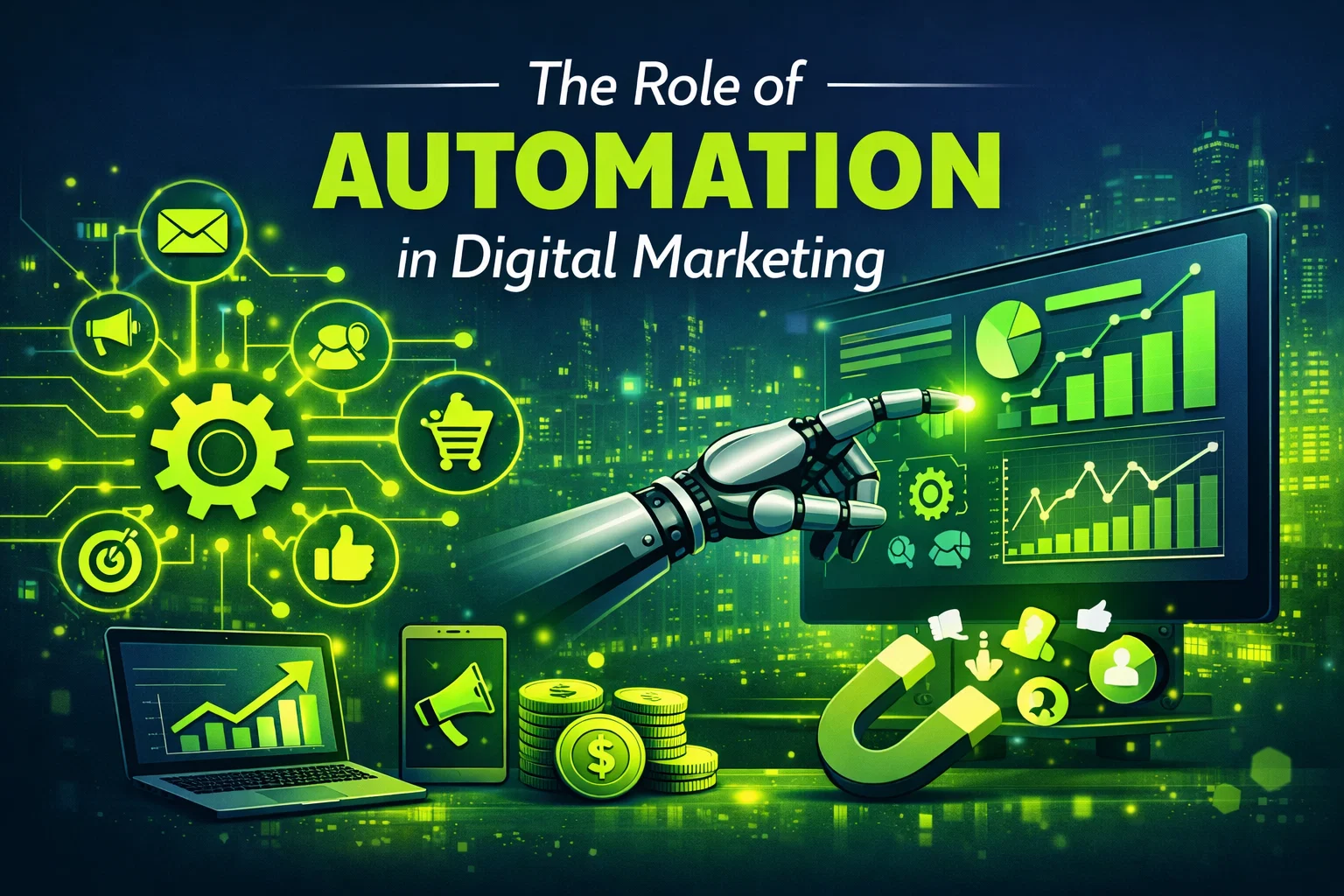
Digital marketing has evolved from manual campaigns and guesswork into a data-driven ecosystem powered by intelligent systems. As businesses scale, managing emails, social media, ads, customer journeys, analytics, and lead nurturing manually becomes inefficient and inconsistent.
This is where automation plays a transformative role.
Automation in digital marketing is no longer just a convenience. It has become a strategic advantage that allows businesses to operate efficiently, personalize experiences, and optimize performance without increasing overhead.
Understanding the role of automation in digital marketing helps businesses move from reactive marketing to proactive growth.
What Is Marketing Automation?
Marketing automation refers to the use of software and technology to streamline, automate, and measure marketing tasks and workflows.
Instead of manually sending emails, tracking leads, or managing ad campaigns one by one, automation systems handle repetitive tasks based on predefined triggers and behaviors.
This includes:
-
Email marketing workflows
-
Social media scheduling
-
Lead scoring systems
-
Customer segmentation
-
Retargeting campaigns
-
Performance reporting
Automation reduces manual effort while increasing consistency and scalability.
Why Automation Matters in Modern Digital Marketing
As digital ecosystems become more complex, customer expectations also increase.
Today’s customers expect:
-
Instant responses
-
Personalized content
-
Timely follow-ups
-
Relevant offers
Manually delivering this level of personalization at scale is nearly impossible.
Automation allows businesses to:
-
Maintain consistent communication
-
Deliver tailored messaging
-
Respond to user behavior in real time
-
Improve efficiency without expanding teams
It bridges the gap between personalization and scalability.
1. Email Marketing Automation
Email marketing remains one of the highest ROI channels in digital marketing. Automation makes it more powerful.
Instead of sending generic newsletters to everyone, automated email systems allow businesses to create sequences triggered by user actions.
Examples include:
-
Welcome email sequences
-
Abandoned cart reminders
-
Post-purchase follow-ups
-
Lead nurturing campaigns
-
Re-engagement emails
These automated workflows ensure that users receive the right message at the right time without manual intervention.
The result is better engagement, higher open rates, and improved conversions.
2. Lead Nurturing and Customer Journey Automation
Not every website visitor is ready to buy immediately. Automation helps guide prospects through a structured customer journey.
Through lead nurturing automation:
-
New leads receive educational content
-
Engaged users receive product comparisons
-
High-intent prospects receive direct offers
This structured approach builds trust gradually and increases the likelihood of conversion.
Automation ensures no lead is forgotten or ignored.
3. Social Media Automation
Managing multiple social media platforms manually can consume valuable time.
Automation tools allow businesses to:
-
Schedule posts in advance
-
Maintain consistent posting frequency
-
Analyze engagement performance
-
Recycle evergreen content
Consistency improves brand visibility and engagement, while automation reduces time spent on repetitive tasks.
However, automation should not replace human interaction. It should support it.
4. Paid Advertising Optimization
Automation plays a major role in paid advertising platforms.
AI-driven ad platforms now:
-
Adjust bids automatically
-
Optimize targeting
-
Analyze audience behavior
-
Test variations of ad creatives
This improves return on ad spend (ROAS) while reducing manual oversight.
Automation ensures campaigns adapt quickly to performance data, improving efficiency.
5. Customer Segmentation and Personalization
Personalization is a key factor in digital marketing success.
Automation systems analyze:
-
User behavior
-
Purchase history
-
Website interactions
-
Engagement patterns
Based on this data, businesses can segment audiences into targeted groups.
This allows for:
-
Personalized email campaigns
-
Dynamic website content
-
Tailored product recommendations
-
Relevant retargeting ads
Personalized marketing increases engagement and strengthens brand loyalty.
6. Data Analytics and Reporting Automation
Tracking performance manually is time-consuming and prone to error.
Automation tools compile data from:
-
Website analytics
-
Email campaigns
-
Paid ads
-
Social media platforms
Automated reporting provides real-time insights into:
-
Conversion rates
-
Traffic sources
-
Engagement metrics
-
Campaign performance
This allows businesses to make data-driven decisions quickly and confidently.
7. Improving Efficiency and Reducing Costs
One of the biggest advantages of automation is operational efficiency.
By automating repetitive tasks, businesses can:
-
Reduce human error
-
Save time
-
Lower labor costs
-
Focus on strategic planning
Automation does not replace creativity or strategy. It supports them by eliminating unnecessary manual work.
8. Enhancing Customer Experience
Customer experience directly impacts brand perception and retention.
Automation enhances experience by:
-
Providing instant responses
-
Delivering relevant content
-
Ensuring consistent communication
-
Reducing delays
For example:
-
Chatbots provide 24/7 support
-
Automated follow-ups confirm purchases
-
Reminders encourage repeat engagement
A smooth, responsive experience builds trust.
9. Scaling Marketing Efforts
Growth requires scalability.
Without automation, scaling marketing efforts often means hiring more staff or increasing workload.
Automation allows businesses to:
-
Expand campaigns
-
Manage larger audiences
-
Handle increased traffic
-
Maintain consistency
It creates infrastructure for sustainable growth.
10. Avoiding Common Automation Pitfalls
While automation offers many benefits, over-automation can feel impersonal.
Common mistakes include:
-
Sending excessive automated emails
-
Ignoring personalization
-
Removing human interaction completely
-
Over-relying on AI without strategy
Successful automation balances efficiency with authenticity.
Automation should enhance the human element—not eliminate it.
Automation and SEO Integration
Automation also supports SEO strategies by:
-
Scheduling content updates
-
Monitoring keyword performance
-
Tracking technical issues
-
Identifying optimization opportunities
Although SEO itself requires strategic planning, automation tools streamline monitoring and reporting processes.
This improves long-term search visibility.
The Future of Automation in Digital Marketing
Automation continues to evolve through AI and machine learning.
Future advancements will likely include:
-
Smarter predictive personalization
-
Advanced customer journey mapping
-
Improved AI-generated content support
-
Enhanced behavioral targeting
Businesses that adopt automation strategically will remain competitive in increasingly complex digital landscapes.
Automation is becoming less about efficiency alone and more about intelligent marketing.
Conclusion
Automation has transformed digital marketing from a manual, reactive process into a scalable, data-driven system.
It allows businesses to:
-
Deliver personalized experiences
-
Maintain consistent communication
-
Optimize campaigns in real time
-
Scale efficiently
However, automation is most powerful when combined with strategic planning and human creativity.
Businesses that use automation thoughtfully gain a competitive advantage—improving both performance and customer experience.
In today’s digital environment, automation is not optional. It is foundational.
Contact Website Legends for digital marketing services today!
Frequently Asked Questions
1. What is automation in digital marketing?
Automation in digital marketing uses software tools to streamline repetitive tasks like email campaigns, lead nurturing, and social media scheduling.
2. Does automation replace human marketers?
No. Automation supports marketers by handling repetitive tasks, allowing them to focus on strategy and creativity.
3. How does automation improve customer experience?
It ensures timely communication, personalized messaging, and faster responses.
4. Is marketing automation expensive?
Costs vary, but automation often reduces long-term operational expenses by improving efficiency.
5. Can small businesses benefit from automation?
Yes. Automation helps small businesses scale without expanding teams significantly.
6. Does automation help with SEO?
Indirectly, yes. Automation tools assist in tracking performance, monitoring technical issues, and optimizing content strategies.
7. What are examples of marketing automation tools?
Email workflow systems, CRM platforms, social media schedulers, and AI-driven ad management tools.
8. How does automation impact lead generation?
It improves lead nurturing and ensures consistent follow-ups, increasing conversion potential.
9. Can automation personalize marketing messages?
Yes. Automation systems use behavioral data to tailor messages to specific audience segments.
10. What is the biggest benefit of automation in marketing?
Efficiency combined with scalability, allowing businesses to grow without overwhelming resources.